
Should You Use Ice or Heat? A Physiotherapist Explains When Each Works Best

Disclaimer: This advice is for general information only and is not a substitute for professional medical advice. Always consult a qualified healthcare professional for assessment and treatment.
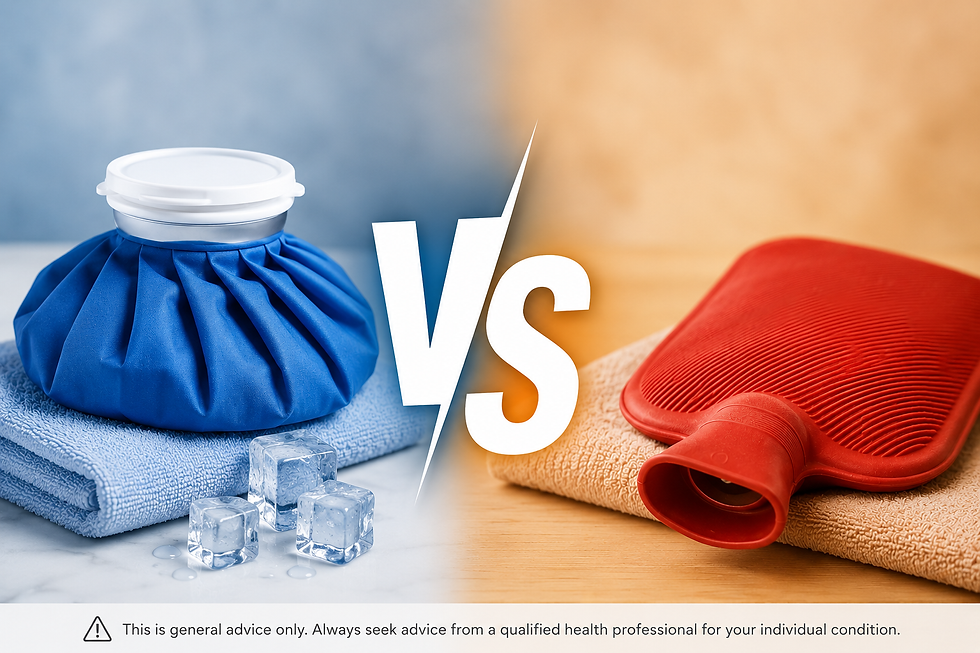
One of the most common questions we hear is, "Should I use ice or heat?" The answer depends on the type of injury and where you are in the recovery process. While both can help relieve pain, they work in different ways and are most effective in different situations.
This guide explains when to use ice, when to use heat, and when it's a good idea to seek professional advice if your symptoms aren't improving.
When Should You Use Ice?
Ice, also known as cold therapy, is generally most helpful during the first 24 to 48 hours after an acute injury or whenever there is noticeable swelling or inflammation.
Ice can help:
Reduce pain
Limit excessive swelling
Slow down inflammation in the early stages
Provide temporary relief after a flare-up
Ice is commonly recommended for:
Sprained ankles
Ligament injuries
Acute muscle strains
Knee injuries with swelling
Tendon flare-ups
Minor sports injuries
Apply an ice pack wrapped in a towel for 15 to 20 minutes at a time. You can repeat this every two to three hours during the first couple of days if needed. Never place ice directly onto your skin, as this can cause skin damage.
When Is Heat a Better Choice?
Heat is usually more helpful for long-standing aches, muscle tightness and stiffness rather than new injuries. Heat works by increasing blood flow to the area, helping muscles relax and making movement feel more comfortable.
Heat is often useful for:
Muscle tension
General back stiffness
Neck stiffness
Osteoarthritis
Chronic joint aches
Tight muscles before gentle exercise
Apply a warm heat pack for around 15 to 20 minutes. The heat should feel comfortably warm rather than hot, and you should never sleep with a heat pad switched on.
Ice or Heat for Common Conditions
Condition | Ice | Heat |
Sprained ankle | ✅ Yes | ❌ Not initially |
Swollen knee | ✅ Yes | ❌ Avoid until swelling settles |
Muscle strain (first 48 hours) | ✅ Yes | ❌ Usually avoid initially |
Tight muscles | ❌ Usually not | ✅ Yes |
Back stiffness | ❌ Usually not | ✅ Yes |
Osteoarthritis | Sometimes | ✅ Often helpful |
Tendon pain after activity | ✅ Can help | Sometimes later |
Can You Alternate Between Ice and Heat?
Sometimes, yes. Once the initial swelling has settled, some people find alternating between heat and ice helps manage ongoing symptoms. For example, you might use heat before gentle exercise to loosen stiff muscles and ice afterwards if the area becomes sore.
However, if you're unsure what is causing your pain or your symptoms are getting worse, it's best to seek professional advice rather than relying on self-treatment alone.
How Long Should You Use Ice or Heat?
For most people:
Ice: 15 to 20 minutes at a time, with a towel between the ice pack and your skin.
Heat: 15 to 20 minutes using a warm heat pack or hot water bottle wrapped in a cover.
Using either treatment for longer periods isn't usually more effective and may increase the risk of skin irritation.
Common Myths
"Ice speeds up healing."
Not necessarily. Ice is excellent for reducing pain and helping control excessive swelling after an injury, but it doesn't directly heal damaged tissues.
"Heat should never be used after an injury."
Heat is generally avoided during the first day or two if there's significant swelling. Once the acute phase has passed, it may help reduce stiffness and improve movement.
"More is better."
Whether you're using ice or heat, longer treatments don't usually provide extra benefit. Short, controlled applications are safer and just as effective.
When Should You Seek Medical Advice?
While many minor aches and injuries settle with time, some symptoms shouldn't be ignored. Consider seeking medical advice if you experience:
Severe pain that isn't improving
Inability to put weight through a limb
Significant swelling after an injury
A joint that feels unstable or keeps giving way
Numbness or tingling
Loss of movement
Pain that continues for several weeks despite self-management
Early assessment can often identify the cause of your symptoms and help you return to normal activities more quickly.
Frequently Asked Questions
Is ice or heat better for back pain?
If your back feels stiff or tight, heat is often more comfortable. If you've recently strained your back and it's painful or inflamed, ice may provide temporary relief
during the first couple of days.
Should I use ice after exercise?
If an area becomes swollen or particularly sore after activity, ice may help reduce discomfort. General muscle soreness after exercise doesn't always require ice.
Can heat make swelling worse?
Yes. Applying heat to a newly swollen injury may increase blood flow and make swelling worse during the early stages.
Can I use a heat pack every day?
For many people with long-term stiffness or arthritis, using heat daily is perfectly
reasonable, provided the temperature is comfortable and the skin is protected.
The Bottom Line
Choosing between ice and heat doesn't have to be confusing. As a general guide, ice is usually most helpful for recent injuries with swelling, while heat tends to work better for muscle tightness, stiffness and long-term aches.
If your pain isn't improving, keeps returning or is stopping you from doing the things you enjoy, it's worth getting it assessed rather than simply masking the symptoms. Understanding the cause of your pain is often the first step towards a successful recovery.

Comments